Imagine that every time you scrub your plate, thousands of invisible particles detach from your sponge. They do not disappear with the tap water. They travel, pass through treatment plants, end up in rivers, then in the oceans, and eventually return... to your own plate, via the water you drink, the salt you use, the vegetables or fish you eat.
This scenario is not a science fiction film. It is the daily reality for millions of households using synthetic sponges... or not.
Every year, the textile and plastic industries dump the equivalent of 50 billion plastic bottles into the ocean. A massive part of this pollution comes from our most mundane actions: washing our clothes and dishes. Your sponge, this small rectangle of yellow and green foam or white viscose that you change every week, is a bomb that daily releases microplastics.
We tend to think that "clean" means "stain-free". But what if the price of your dish cleanliness was the pollution of your body and the planet? It is time to look at what we are really scrubbing.
"It's natural" → Beliefs about viscose
Many of us, aware of ecological issues, have swapped the classic yellow and green sponge for a viscose sponge, often marketed as a "natural" or "biodegradable" alternative, it is actually a problematic and dangerous marketing trap for the environment.
The reality is: Viscose is not a natural fibre like cotton or linen. It is an artificial fibre. To obtain this soft and absorbent material from wood pulp, the industry chemically transforms it and must dissolve it in an aggressive chemical bath.
- Extraction: To produce viscose, the industry clears forests and practices monoculture. Some varieties like eucalyptus are also highly flammable due to their volatile compounds, and these forestry operations, whether managed sustainably or not, can leave ravaged lands.
- The process : Carbon disulfide, a highly toxic, neurotoxic, and reprotoxic solvent (dangerous for reproduction), is used extensively.
- The human impact : Production factories, often located in Southeast Asia, discharge these substances into waterways, poisoning local populations and riparian ecosystems.
- The health impact : The structure of viscose is fragile. It crumbles quickly, releasing micro-particles of chemically treated cellulose that end up in your wastewater.
Choosing a "non-labelled" viscose sponge often indirectly finances a heavy chemical industry that destroys the health of workers and the quality of water on the other side of the world. And even the "eco" versions often remain subject to this chemical process, simply with better treatment of water (not always verifiable).
The invisible danger of microplastics in your body
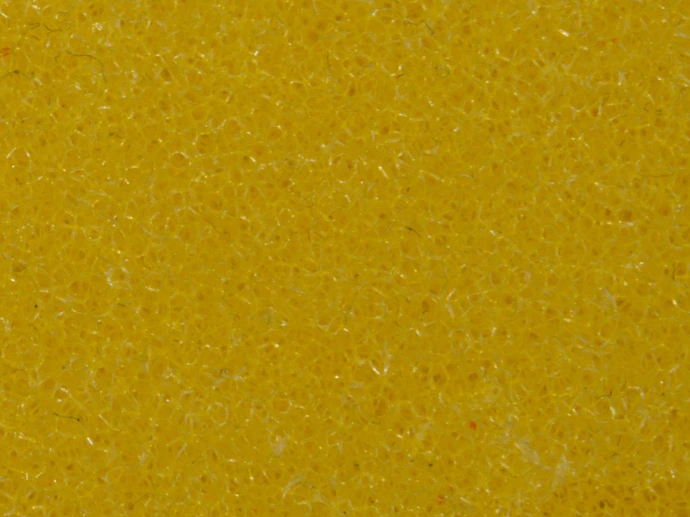
The traditional synthetic sponge (the classic yellow foam block + green scrubber) is made of polyurethane and polyester (petroleum derivatives). Its major problem is not only that it is plastic, but that it disintegrates.
The contamination cycle:
- Friction : With each pass over a plate, the structure of the foam breaks slightly. Thousands of microplastics (particles smaller than 5 mm) and nanoplastics are released.
- Dispersion : These particles are too fine to be fully filtered by the treatment plants. A large part ends up in rivers and oceans.
- Ingestion : Plankton eats these plastics, fish eat the plankton, and we eat the fish. But that's not all: recent studies have found microplastics in tap water, in table salt, and even in human organs (lungs, blood, placenta). See our article on the issues of microplastics
What you scrub, you eat.
By using a plastic sponge, you are actively participating in the contamination of the food chain you depend on. It is a vicious circle where the act of "cleaning" becomes an act of pollution by microplastics. Fortunately, alternatives exist and we are developing them.
The copper sponge: A false good ecotoxic idea
For those looking to avoid plastic, the copper fibre sponge seems to be the miracle solution for scrubbing. Yet it is the most dangerous option for living beings.
Copper is a biocide : a substance particularly used to kill living organisms (bacteria, fungi, algae).
- Health risk : Scrubbing your dishes with copper inevitably leads to the deposition of micro-particles of metal on your plates and glasses. Chronic ingestion of copper, even in small doses, can lead to liver and kidney disorders. The body does not need this excess heavy metal.
- Ecological disaster : When you rinse the sponge, the copper goes down the drain. In aquatic environments, copper is highly ecotoxic. It is lethal to fish, crustaceans and destroys the bacteria essential for the functioning of wastewater treatment plants and the life of soils (when the sludge is spread in agriculture).
Using a copper sponge, is to spread a violent poison into the environment with every dishwashing. It is a "radical" solution that respects neither your health, nor the balance of living things.

Hygiene: When "Clean" becomes dirty
Beyond the composition, it is the very structure of these sponges that poses a problem.
- Bacteria nests : Studies (notably published in Scientific Reports) show that kitchen sponges are one of the most contaminated objects in the home, harbouring up to 54 trillion bacteria per cm³. They regularly contain pathogens such as E. coli, Salmonella or Staphylococcus aureus.
- The false cleaning : A sponge saturated with bacteria and fats no longer cleans; it spreads contamination across all the surfaces of your kitchen.
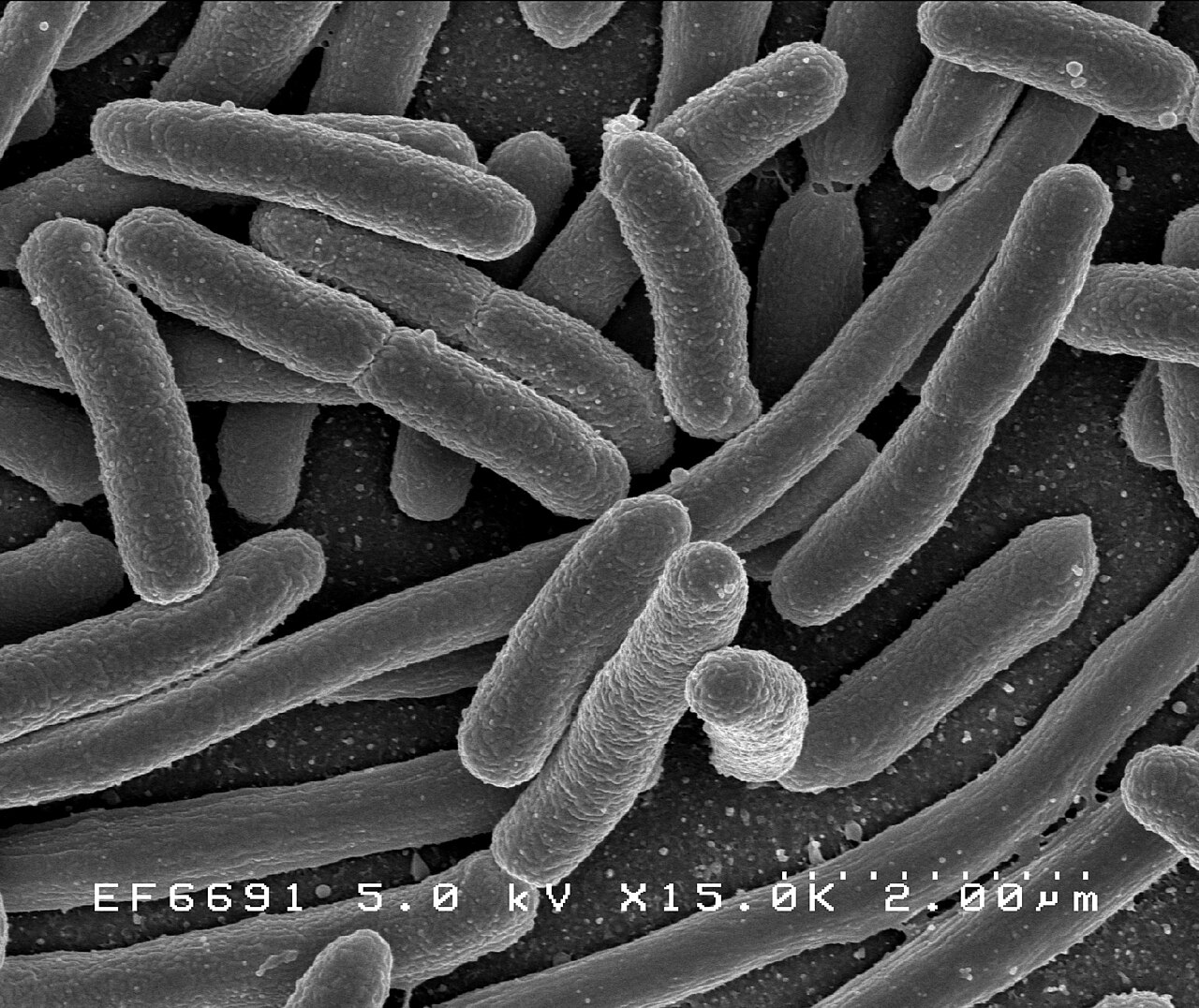
Escherichia coli - Magnification × 15,000
The radical solution: Return to the living
In light of this observation (plastic, heavy chemicals, heavy metals, bacteria), there is no "lesser evil" in conventional industry. The only solution is to change the paradigm.
There are materials that have proven themselves for centuries, before the invention of plastic: liberian fibres.
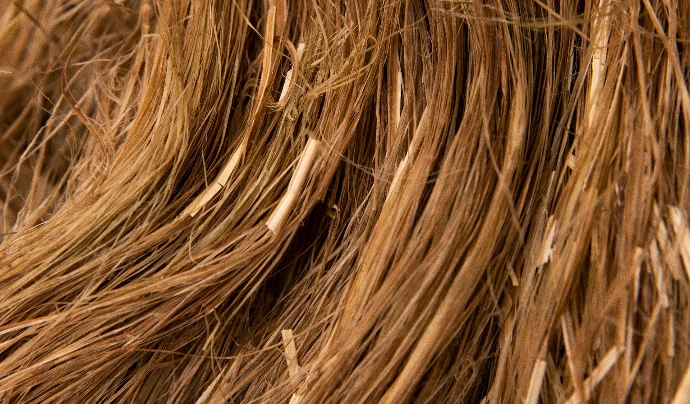
- Hemp : A robust fibre, grown without pesticides or irrigation. It is naturally antibacterial and antifungal. Its mesh structure (and not foam) allows for ultra-rapid drying, cutting off life to bacteria. It releases no microplastics, no chemical residues.
- Linen : Similar to hemp, with exceptional absorption capacity (6 times more absorbent than cotton!) and a natural softness that respects the enamel of the dishes and the skin of the hands.
Choosing a hemp sponge or a linen cloth means:
- Stopping pollution : Zero microplastics, no (hemp) or few (linen) pesticides.
- Protecting your health : No heavy metals, no solvents, fewer bacteria.
- Supporting regenerative agriculture : Hemp and linen enrich the soils and capture CO2.
Conclusion: Your sponge is a political choice
We have the power to choose and the power to boycott harmful industries. If ecology and the future of the planet's habitability are played out in major international summits and in the factories, they are also played out in your sink, three times a day.
With our wallet, we have the power to vote for the world we want and the power to say "STOP" to profit-driven industries, ready to poison us to pay their shareholders.
Every time you choose a sponge, you are voting:
- Are you voting for the petrochemical industry and invisible pollution?
- Are you voting for heavy chemicals and toxic metals?
- Or are you voting for life, for the health of your family and for local agriculture?
There is no trivial gesture. Your sponge can be one more piece of waste or a tool of resilience. A choice that proves to be more economical in the long run.
See the economic comparison: Why does hemp cost less than plastic?