
Changing your washing sponge is a trivial act, repeated every week, even every day. Yet, this small object hides a heavy reality: hidden cost for your budget, health risk for your family and disastrous impact on the planet.
At Design for Resilience, we have decided to no longer choose at random. We have tested, compared and calculated the real cost of each option available on the market. Result: what you think is a saving (the disposable sponge at €1) actually costs you ten times more, not to mention the price to pay for your health and the environment.
Here is the objective comparison to help you make the right choice, once and for all.
1. Comparison of Materials: What you are really scrubbing in your plate
To understand the difference, you need to look at the composition. It’s not just a question of "natural" or "not natural", it’s a question of chemistry and origin.
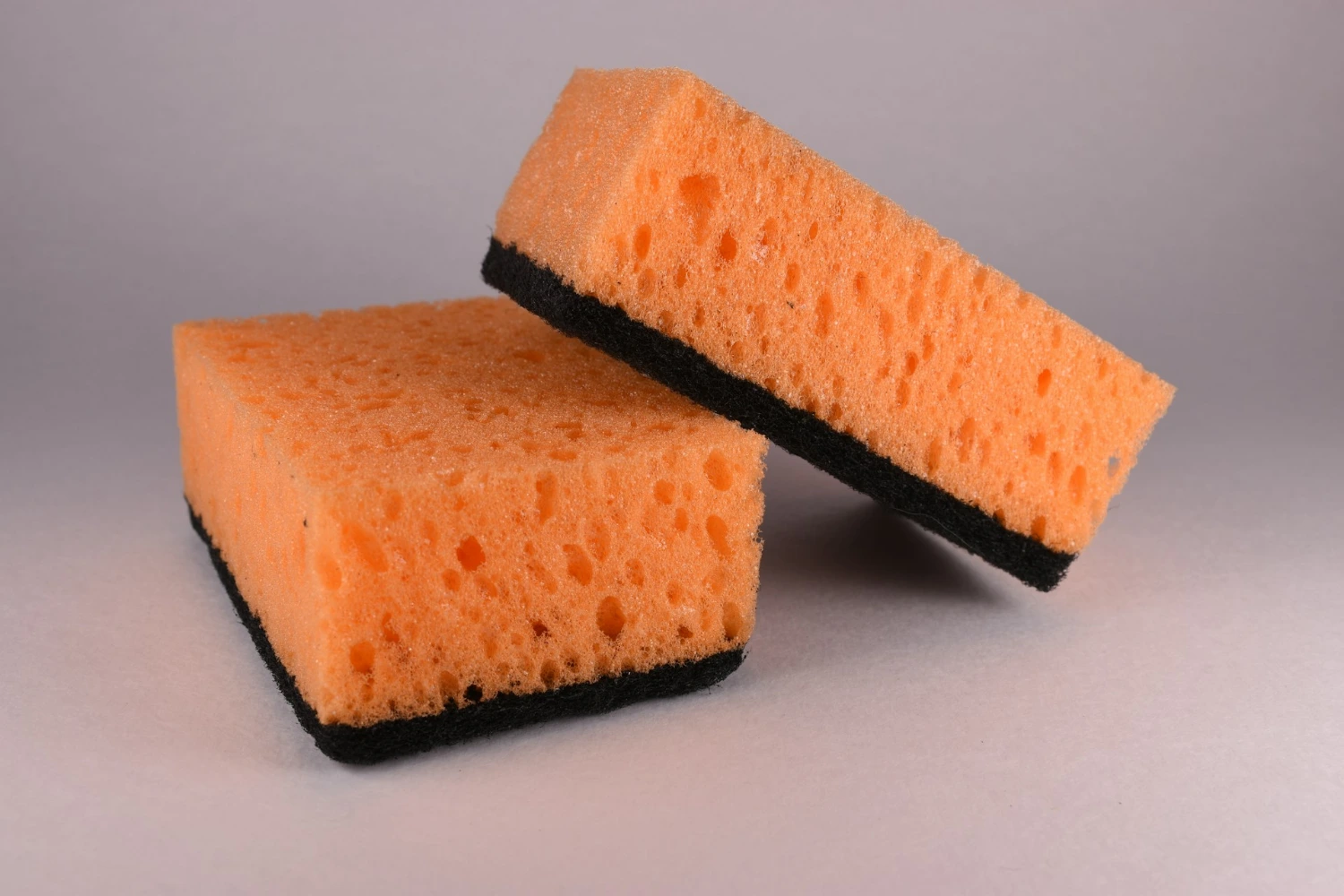
The synthetic sponge (The "green and yellow"):
It is pure plastic. Generally made of polyurethane (PU) for the foam part and polyester or polyamide for the scrubbing part. These materials come from petrochemistry. Their production requires the extraction of oil, an energy-intensive and geopolitically tense process. Moreover, with each friction, it releases microplastics that end up in wastewater, partially returned to the fields via the sludge from treatment plants and in the waterways when they pass through the filters, then into the oceans or groundwater and, ultimately, into the food chain.
The viscose sponge (The plant illusion):
Often presented as an ecological alternative because it comes from wood cellulose, viscose is actually an artificial fibre obtained through a heavy chemical process. To transform wood into pulp, the industry massively uses carbon disulfide, a neurotoxic and reprotoxic solvent. The discharges from this production pollute the waterways and air of the producing regions, endangering the health of workers and local populations. Furthermore, once wet, viscose degrades quickly and becomes a breeding ground for bacteria without biocidal treatment.
Why is viscose a problem? Read our article
And when the (green) scrubbing part of the sponge is made from rPET, recycled plastic, it’s even worse: recycled plastic being even more fragile, it releases more microplastics during use.
The "Fabric" sponge (The bacteria nest):
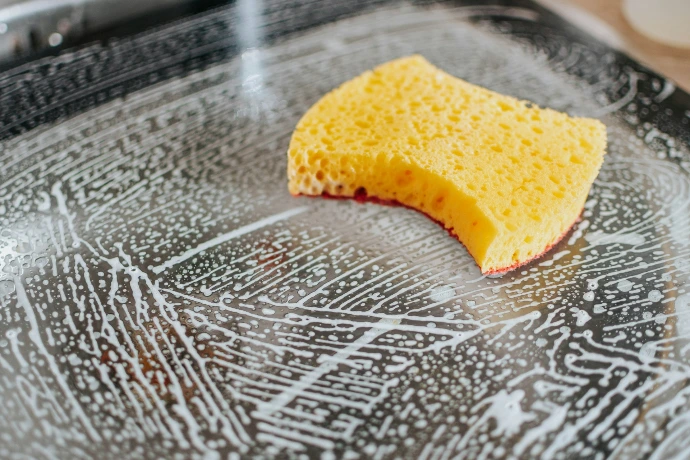
Very popular, it is made of a plastic foam (polyurethane) coated with cotton or synthetic fabric. The problem? The very structure of the object. Water stagnates in the inner foam, protected by the outer fabric that dries more slowly. It is the perfect combination for bacterial proliferation, while retaining the same environmental flaws of plastic (microplastics, oil).

The Copper Sponge (The dangerous biocide) :
But the danger is also ecological. During rinsing, micro-particles of copper end up in wastewater. Now, copper is highly ecotoxic for aquatic life: it is lethal to fish, crustaceans and severely disrupts the balance of essential bacteria in treatment plants and soils where sludge is spread. Choosing copper means choosing to spread a violent poison in the water cycle with every wash.

The Resilient Hemp Sponge (Design for Resilience) :
The Resilient dish sponge is a true alternative to plastic sponges: 100% hemp knitted in Belgium. Hemp is a liberating fibre, grown without pesticides or irrigation. No heavy chemicals, no petroleum derivatives. Just a natural, robust fibre, naturally antibacterial and fully biodegradable.
2. Hygiene and Health: What science says about your sponge
A damp, warm sponge, loaded with food residues is the ideal environment for bacteria. But not all sponges are equal when it comes to this contamination.
According to several microbiological studies, including those published in Scientific Reports and relayed by AARP, conventional kitchen sponges can harbour up to 54 billion bacteria per cubic centimetre. They regularly contain dangerous pathogens such as:
- E. coli (Escherichia coli)
- Salmonella
- Staphylococcus aureus
A German study even demonstrated that some sponges contained bacteria normally associated with faeces or toilets. The major problem with synthetic and viscose sponges is their slow drying time and their structure that traps moisture deep inside. Even rinsed, they remain damp for hours, allowing bacteria to multiply exponentially.
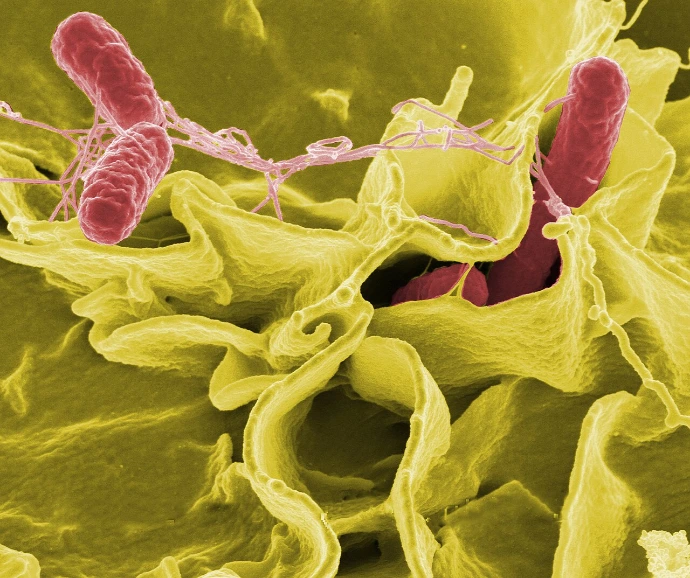
Salmonella - Wikimedia
The advantage of hemp :
Thanks to its open mesh structure and the natural properties of the hemp fibre, our resilient sponge dries extremely quickly. Hemp is naturally antibacterial and antifungal. Our tests, validated by users over 12 months, show that it can stay clean on average for up to 7 weeks without machine washing (with daily rinsing), compared to 3 to 4 days at most for a conventional sponge before developing odours and an invisible bacterial biofilm.
The record of one of our customers :
One of our customers kept their sponge clean for a year, without putting it in the machine, by following our usage and maintenance recommendations. However, all this deserves to be tested and validated by a laboratory, which we currently cannot yet finance. To be continued !
3. Lifespan and Actual Cost : The financial analysis
Comparison table of dish sponges :
| Type of dish sponge | Average unit price | Average lifespan | Required quantity / year | Annual cost | Cost over 18 months | Waste Impact |
|---|---|---|---|---|---|---|
| Disposable synthetic (PET/PU) | €0.30 | 3 days | ~120 units | €36.00 | €54.00 | 120 plastic sponges |
| Classic viscose (Unlabelled) | €1.60 | 2 weeks | ~26 units | €41.60 | €62.40 | 26 viscose sponges |
| "Eco-friendly" viscose | €1.80 | 2 weeks | ~26 units | €46.80 | €70.20 | 26 viscose sponges |
| Copper (Metal fibres) | €9.00 | 2 to 3 months | ~6 units | €54.00 | €81.00 | 6 sponges to recycle |
| Chanvra S (Fine) (Design for Resilience) | €17.75 | 12 months | 1.5 unit* | €26.60 | €26.60 | 0 (Compostable) |
| Resilient Sponge (Design for Resilience) | €24.45 | 18 months | 1 unit | €16.30 | €24.45 | 0 (Compostable) |
*Note: Although it may last longer, for the Chanvra S over 18 months, we count the purchase of a first sponge (12 months) + a second for the remaining 6 months, resulting in a total cost of €26.60 (1.5 x €17.75).
The true cost per day for your budget
When these figures are brought down to daily use, the myth of the "cheap" sponge collapses:
- Disposable synthetic sponge : 0.10 € / day
- Copper sponge : 0.15 € / day (excluding health costs)
- Viscose (Classic or "Eco") (1.80€ / 2 weeks) : 0.128 € / day
- Fine Chanvra S sponge (DFR) : 0.048 € / day (over 12 months)
- Resilient hemp sponge (DFR) : 0.045 € / day (over 18 months)
The evidence is undeniable : With a real lifespan of only 2 weeks, the "eco" viscose sponge becomes one of the most expensive options on the market over time. Our Fine hemp sponge (Chanvra S) costs 2.5 times less per day than its viscose equivalent. As for our flagship model, the Resilient dish sponge, it is nearly 3 times cheaper for daily use.
Over a period of 18 months, choosing Design for Resilience allows you to save :
- 45.80 € compared to the "eco" viscose.
- 29.55 € compared to disposable plastic.
And if we compare the number of sponges avoided over 2 years :
- 1 Resilient sponge = 242 small synthetic sponges thrown away less.
- 1 Fine sponge = 52 viscose sponges avoided if we consider the duration of 2 weeks over a year).
Choosing Design for Resilience is therefore a gesture for the planet, for its health, but also for your wallet.
4. The Comparison of Cloths and Towels
The logic is the same for maintaining the table and work surfaces. Here too, durability makes a difference compared to conventional options.
- Classic cloths (Cotton/Viscose/Microfibre): They wear out, stain permanently and retain odours within a few days. Their production (pesticides for cotton, deforestation for viscose, oil for microfibre) has a huge hidden cost.
Our natural fibre solutions (Design for Resilience):
- Hemp - The Hemp Cloth (Hemp): Ideal for work surfaces and the table. Robust, it does not scratch and does not retain odours thanks to the antibacterial properties of hemp.
- Linen - The Absorbent Towel (Linen): A high-performance hybrid product that serves as both an ultra-absorbent cloth and a hand towel. Rapid absorption (6x more than cotton), quick drying.
Over a period of 3 years, investing in a hemp cloth or a linen towel represents a direct saving of more than €40 compared to the frequent replacement of conventional towels, while ensuring superior hygiene and zero microplastics.
Conclusion: Changing sponges means changing the system
This comparison is not just a matter of cleaning. It is a societal choice. By choosing a hemp sponge produced in Belgium, you are voting for:
- Your health : Fewer bacteria, no microplastics on your plate.
- Your wallet : A cost divided by 3 over time.
- Our planet : Zero oil, zero plastic waste, support for a regenerative agricultural sector.
There is no longer any reason to continue funding an industry that pollutes your kitchen and the oceans. Resilience is within reach, starting from your next dishwashing.