
Introduction to textile hemp
What is textile hemp?
Industrial hemp (Cannabis sativa L.) is a plant herbaceous annual cultivated for thousands of years, now once again essential for the production of eco-friendly textiles. Unlike its psychotropic varieties, industrial hemp contains less than 0.3% THC, which allows its cultivation in numerous countries, including France. Its fibre, extracted after a process of retting on the ground and then scutching, offers a sustainable alternative to synthetic fibres and artificial fibres (made from wood pulp). Thanks to its rapid growth and its ability to capture significant amounts of CO₂ (1.5 to 2 times more), hemp is a renewable and environmentally friendly resource, ideal for a textile industry and a society in search of more responsible solutions.
A bit of hemp history...
The earliest traces of hemp cultivation date back to 8,000 BC in China, one of the cradles of the Neolithic agricultural revolution. Archaeological remains, including hemp fibres integrated into ceramics, attest to its early use for textiles, ropes, and tools. Studies published in 2016 even suggest its appearance in households as early as 11,500 to 10,200 BC in Japan and Eastern Europe, making it one of the very first plants cultivated by humanity.
Later, around 5,500 BC, traces were discovered in Germany (Thuringia), where it was already used to make clothing and ropes.
Originating from Central Asia, hemp then spread with human migrations across Eurasia.
But its usefulness far exceeded textiles. In the Middle Ages and until the 18th century, it was essential for boat sails, ropes, and even paper. By the early 20th century, it was already being used for lightweight and ultra-strong composite materials, as well as in food, insulation, medicine, and veterinary care.
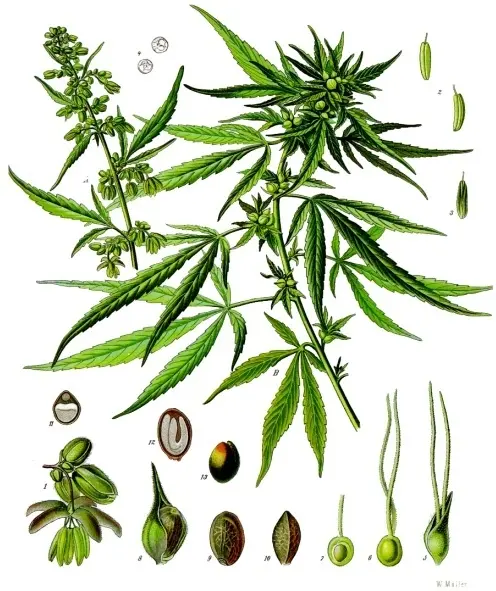
Botanical plate of Cannabis sativa - Franz Eugen Köhler, 1897 - Public domain via Wikimedia Commons
A plant hindered for over a century
In the United States, hemp was the victim of a massive political and industrial boycott in the 1930s. Behind this disappearance were powerful players: press magnates like William Randolph Hearst, owner of vast forests intended for paper, and the petrochemical company DuPont, which was then launching its nylon - a synthetic fibre that struggled to compete against the strength and competitive cost of hemp - felt threatened by the industrial advances made in the harvesting and decortication of hemp at the end of the 1930s.
It was at this time that Harry Jacob Anslinger, appointed by Andrew Mellon — Secretary of the Treasury and himself one of the main financiers of DuPont and uncle of Anslinger's wife) — at the head of the Federal Bureau of Narcotics, orchestrated a media campaign of fear, misinformation and demonisation of hemp, the “marijuana” by presenting it as a drug that increases violence and delinquency. In 1937, this propaganda led to the vote of the Marihuana Tax Act, a law that imposed such a high tax that most players in the sector, including industrial hemp producers, abandoned it.
Beyond the economic aspect, hemp specialists we met in 2016 also pointed out the racist nature of this boycott; the term “marijuana” was used to stigmatise Mexicans. Anslinger notably stated: « Most marijuana smokers are Black, Mexicans, Filipinos... »
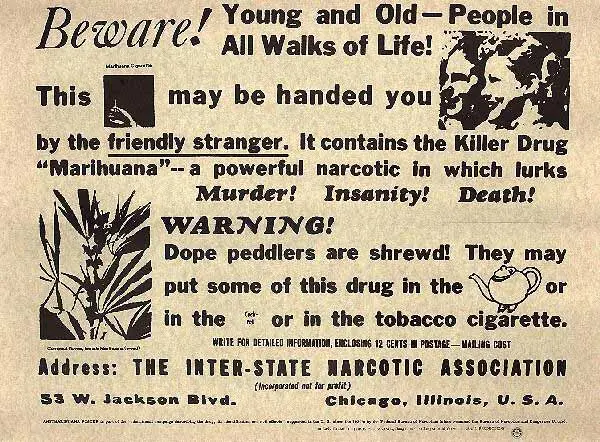
Poster distributed by the Federal Bureau of Narcotics, in 1935, during the demonisation of the product stating "...marijuana is a powerful narcotic that leads to murder, and drives one to madness and to death".
This boycott had global repercussions. In Europe, despite the ecological and economic advantages of hemp in the transition and reduction of greenhouse gas emissions — its resilience, low water consumption, and absence of pesticides — its relocalisation remains hindered. The lobbies of forestry, plant protection products, and plastics, still active, continue to influence regulations, blocking a sector that is ready to be reborn.
Technically and financially, the relocalisation of textile hemp spinning and its processing remains a challenge. Hemp missed the boat on its industrial development in Europe due to its boycott, and each material requiring its own techniques and machines, it is complex to process it with machines designed for cotton or linen fibres, although it is possible.
Sources :
Le Cannabiste — Racism in prohibition
Mr-Hanf — History of cannabis and racism
Wikipedia — Harry J. Anslinger
Not fun fact :
- In Europe, the regulation of hemp (THC < 0.2% or 0.3%) is often stricter than necessary, which hinders its development.
- The lobbies of plastics, pesticides, and forestry are active at the European level, notably through groups like CropLife Europe or Plastics Europe.
- EU reports recognise that hemp is a sustainable crop, but its development is hindered by regulatory and economic barriers.
Sources :
European Commission — Hemp and agriculture
Valbiom — Perspectives on hemp in Belgium
All of Europe — Pesticides and lobbies
Relocalisation of hemp in Wallonia: attempts, obstacles and hopes
In recent years, several initiatives have emerged in Wallonia to relocate the hemp sector, notably through the creation of a Walloon decortication unit, now abandoned.
While hemp is redeveloping too slowly in textiles, it has, on the other hand, found its niche in other sectors:
- Food: with brands like Cannavie, specialising in hemp seeds and oils.
- Sustainable construction: through players like IsoHemp, in insulation and renovation.
Attention : each use and sector requires specific varieties. A field of hemp grown for its food seeds cannot be used for textiles; the varieties differ according to uses (food, textile, construction, etc.) and are not harvested at the same time depending on the use. However, food-grade hemp fibre remains useful for replenishing soils.
The technical and financial challenge of textile spinning
Relocating the spinning and processing of textile hemp in Europe remains a complex challenge, both technically and financially.
Hemp spinning missed its industrial “boom” in Europe after decades of boycott. And its processing requires 10 times more labour than cotton, which inevitably impacts its final price.
Today, the machines in industrial spinning mills are designed for cotton, linen, wool and knitting machines for standardised and synthetic fibres. Not for hemp, nor for linen. Although it is possible to spin hemp fibre in mills designed for other fibres, this does not necessarily yield the industrial quality required for knitting. Although tests in linen mills are promising.
In Germany and China, some factories spin hemp using cotton machines. This is referred to as “cottonised fibres”: the fibres are cut to be shorter (2 to 6 cm), whereas in the wild, hemp can reach up to 7 metres.
📌 Consequence : the longer a fibre is, the stronger the yarn is and the less it produces “fuzz”. The cottonised fibres, being shorter, are therefore more fragile and less effective: which poses a problem for the final use.
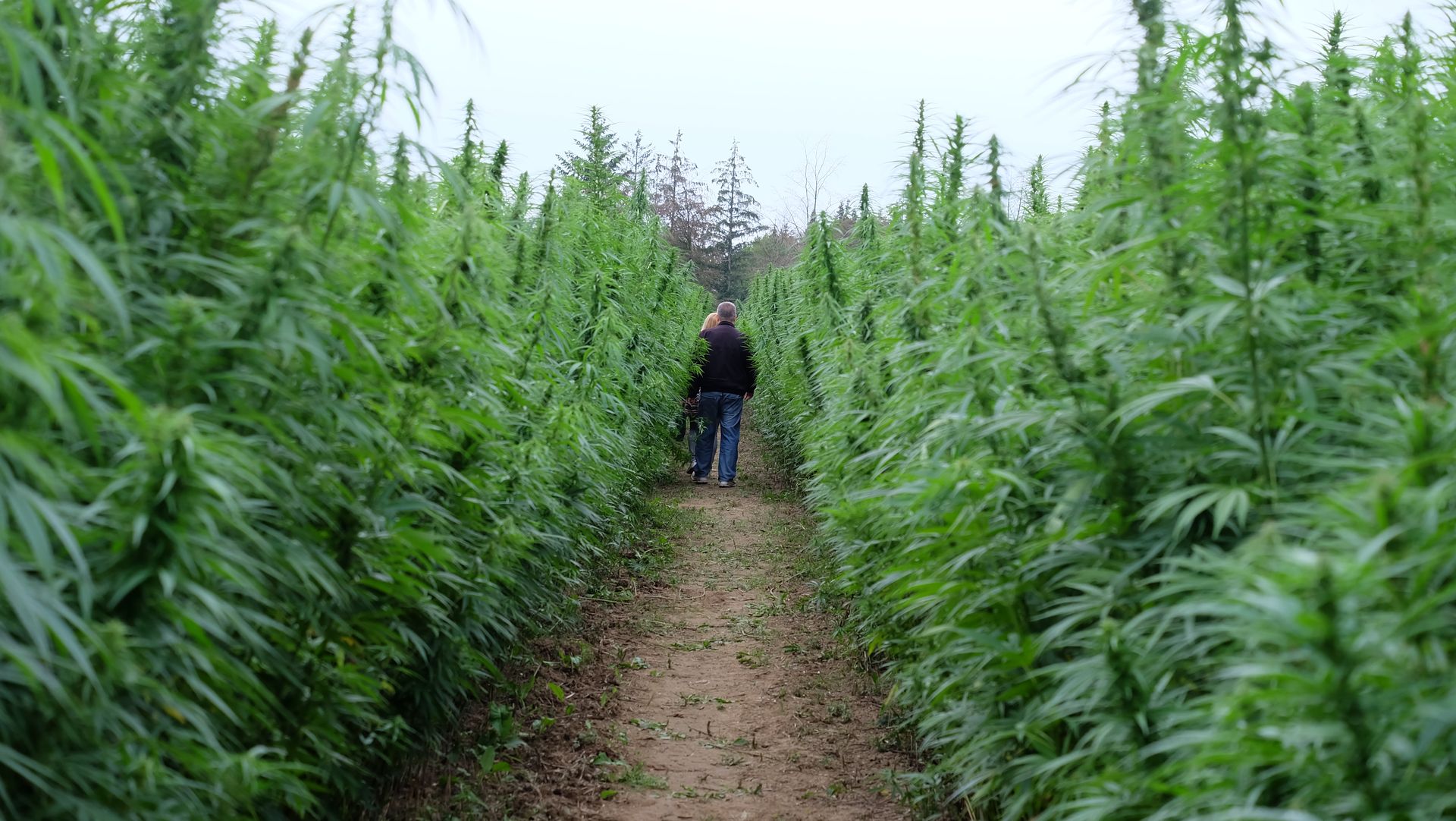
Visit to a food hemp crop Cannavie - 2018
Tests in Europe: promising, but still experimental
In Belgium, the Valbiom Association has conducted tests with mills specialised in linen, in Eastern Europe. The results are encouraging, but the yarn remains in a state of experimentation. Consequences: limited stock, unpredictable restocking times, yarn not yet fully adapted for knitting.
Although our goal is to integrate local hemp yarn into our production, and although we are enthusiastic and eager, at the current state, integrating this yarn into our series products would be too risky:
- Each yarn requires programming new knitting patterns specific to the chosen yarn and this requires investment.
- Each sample should be redone from the beginning.
- For no guarantee of future availability.
Result: this would make our sponges much more expensive or could lead to unsustainable financial losses.
However, we are already integrating it on request, in our unique or custom-made pieces (scarves, shirts, trousers) crafted in our workshop.
Make an appointment to order a custom piece
Why is this thread not yet suitable for our sponges?
Although this thread can be woven industrially, the technical properties of this thread do not yet match those of the thread from our current supplier. It is not yet suitable for mass knitting for our sponges. Even though the latest prototypes are very promising!
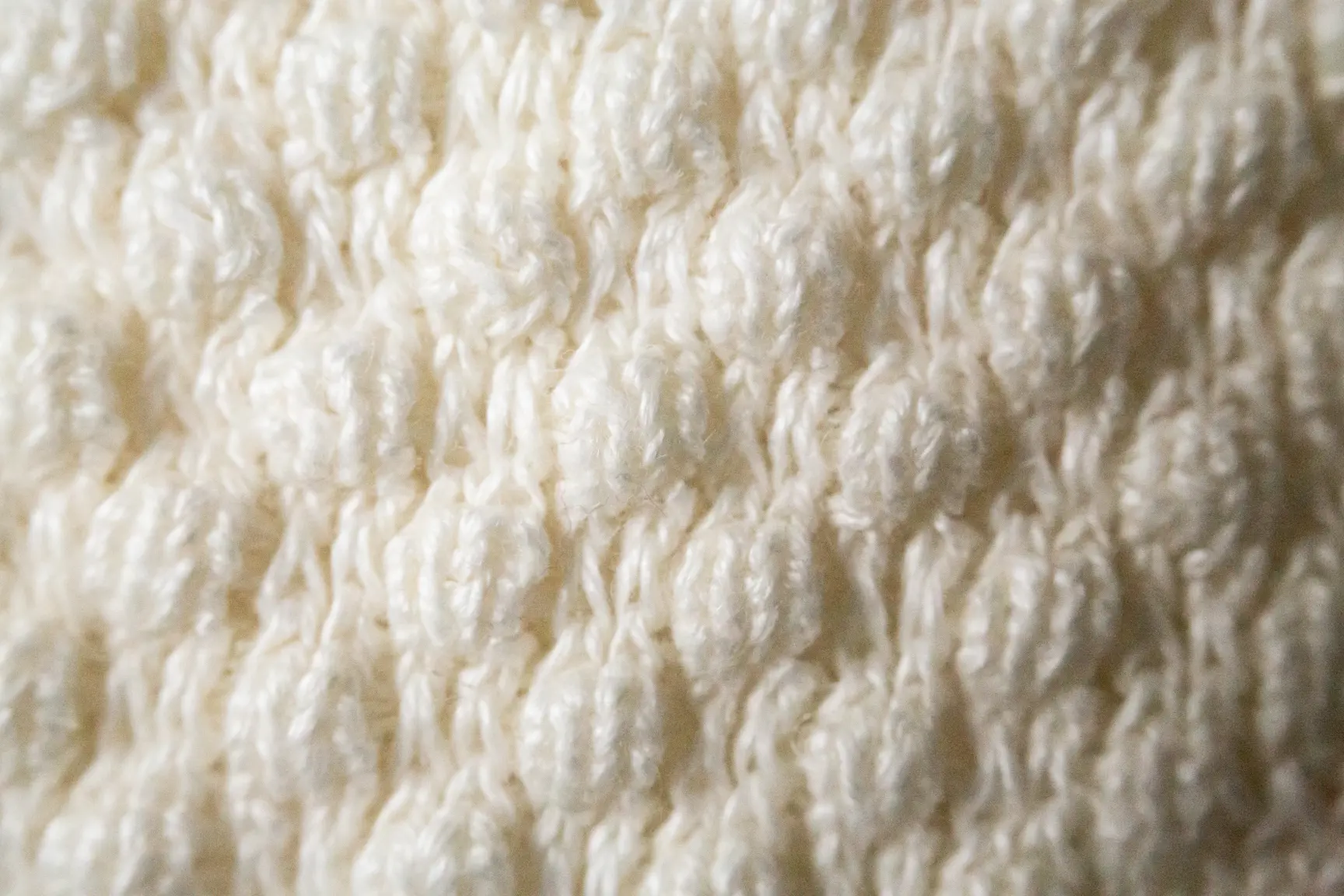
Our selection of thread: a strict order of priorities
Our hemp thread, used in our cleaning accessories, is chosen according to 4 hierarchical criteria:
- Composition: 100% natural AND sustainable material, single-material, limited and controlled treatments and dyes if existing, conditions of obtaining and/or extraction...), life cycle of the material (biodegradability, ...).
- Quality: technical resistance, aesthetics, softness (if applicable), durability.
- Certifications: guarantee of safety (without harmful substances). Fairtrade, if existing. Organic if accessible.
- Origin: traceability and proximity if available.
We apply these criteria to the selection of each of our materials. For the moment, we do not have access to either Fairtrade industrial hemp thread or organic hemp. But should we remind that hemp cannot be sprayed?
What about working conditions abroad for growing and processing hemp?
At our level, we currently do not have the ability to control this part ourselves. While human exploitation, sometimes even child labour in cotton fields, which need to be harvested by hand, is well documented; this is not the case for hemp farms, which are harvested using machines and then processed in Tunisia.
Our primary fight is to reduce our dependence on oil and plastic, which make us all ill and involve territorial conflicts and land grabbing. The priority in order to fight for our rights is to be healthy; we take pride in selecting materials and production techniques that respect animal welfare, the planet, the workers in the textile sector, and your health; as well as creating alternatives to products and production methods that make human and animal populations sick.
Why is origin not the priority criterion?
Our positioning comes notably from a finding made by UCM in their study “Pre-diagnosis in eco-design – ALPHA”:
Transport accounts for only 4% of the pollution emitted by fast fashion.
The main impact comes from:
- For cotton: pesticides, irrigation water, chemical treatments.
- For synthetics: extraction, production, processing.
🌿 Hemp, on the other hand, is a solution for the future: less water, no pesticides, strong, biodegradable.
We therefore prioritise the quality and technical specifications of the yarn over distance and have thus prioritised the choice of a yarn available all year round, which allows us to knit with very few defects and therefore generates little to no waste related to production defects, resulting in 15 to 20 times less waste than other workshops.

📍 Where is our hemp produced today?
Currently, our hemp is spun at the gates of Europe (in Tunisia), grown in China and knitted in Belgium; and it is actually the closest, circular and qualitative that you will find currently in France or Belgium.
Those from our ranges of fabrics used in our bespoke clothing come from: either Eastern Europe in Romania; or from Belgium and spun in Poland.
Hemp: a zero pesticide plant for a textile that regenerates the soil
Why does hemp need no pesticides?
Hemp is a particularly effective plant for defending itself.
Thanks to its natural terpenes and cannabinoids (such as CBD, CBG or CBC), it repels insects, fungi and diseases without human intervention. And we like that. Its rapid growth and plant density also smother weeds, making herbicides unnecessary for the next crop. It is therefore a key crop plant in the transition of even the most conventional farmers.
In Europe, as in Belgium, its cultivation is prohibited from pesticide spraying; it has no need for any.
And elsewhere in the world?
It's the same thing: no country allows or needs to spray pesticides on industrial hemp. In China, where it has been cultivated for 5,000 years, it grows naturally without treatment. Whether in the USA, Canada, or Australia, certified “industrial” hemp crops (THC < 0.3%) are grown without pesticides. And that doesn't make pesticide manufacturers smile either. And we love that. :)
Hemp, cotton and viscose: the ecological comparison
Criterion | Hemp | Conventional cotton | Viscose (rayon) |
Water required | 7x less than cotton | Very high (10,000 L/kg) | High (2,000–5,000 L/kg) |
Pesticides | None | Very high (25% of global pesticides!) | Often high (depending on the source) |
Fire risk | Very low: wet plant, high water content, low flammability in cultivation | Medium: increased risk in dry periods, especially in arid areas | Very high: volatile oils fuel the fire, dry leaf litter, rapid spread |
Yield/ha | 3x more fibres than cotton | Medium | Medium to low |
CO₂ sequestration | 1 tonne/ha/year | 0.4 tonne/ha/year | Low (depending on the forest exploited) |
Soil | Regenerates, structures, detoxifies | Depletes, erodes, dries out | Deforestation, soil depletion, fire risk |
Sustainability | Cultivable in rotation, without pesticides. Natural and mechanical processing | Monoculture, often on degraded soils, poisons local populations; increased cancers, diseases, and deaths. Mechanical processing requiring the use of detergents | Monoculture, often on degraded soils, artificial processing requiring solvents or acids and substances that can be very toxic. Never in a completely closed loop |
Social | Re-localisable, rural jobs | Exploitation of adult or child workers is common, families' dependence on GM seeds and pesticides, land grabbing, suicide or rural exodus of farmers | Opaque supply chain, often in Asia and South America |
Deforestation | N/A: grows on existing agricultural soils | Low: rarely linked to forest | High: often sourced from tropical forests (eucalyptus, pine wood) |
Quality (resistance of textile fibres) | Very strong: fibres 3x stronger than cotton, tear-resistant, durable over time | Medium: degrades with washing, less resistant to wear | Low to medium: fragile fibre, loses strength after washing, not very durable |
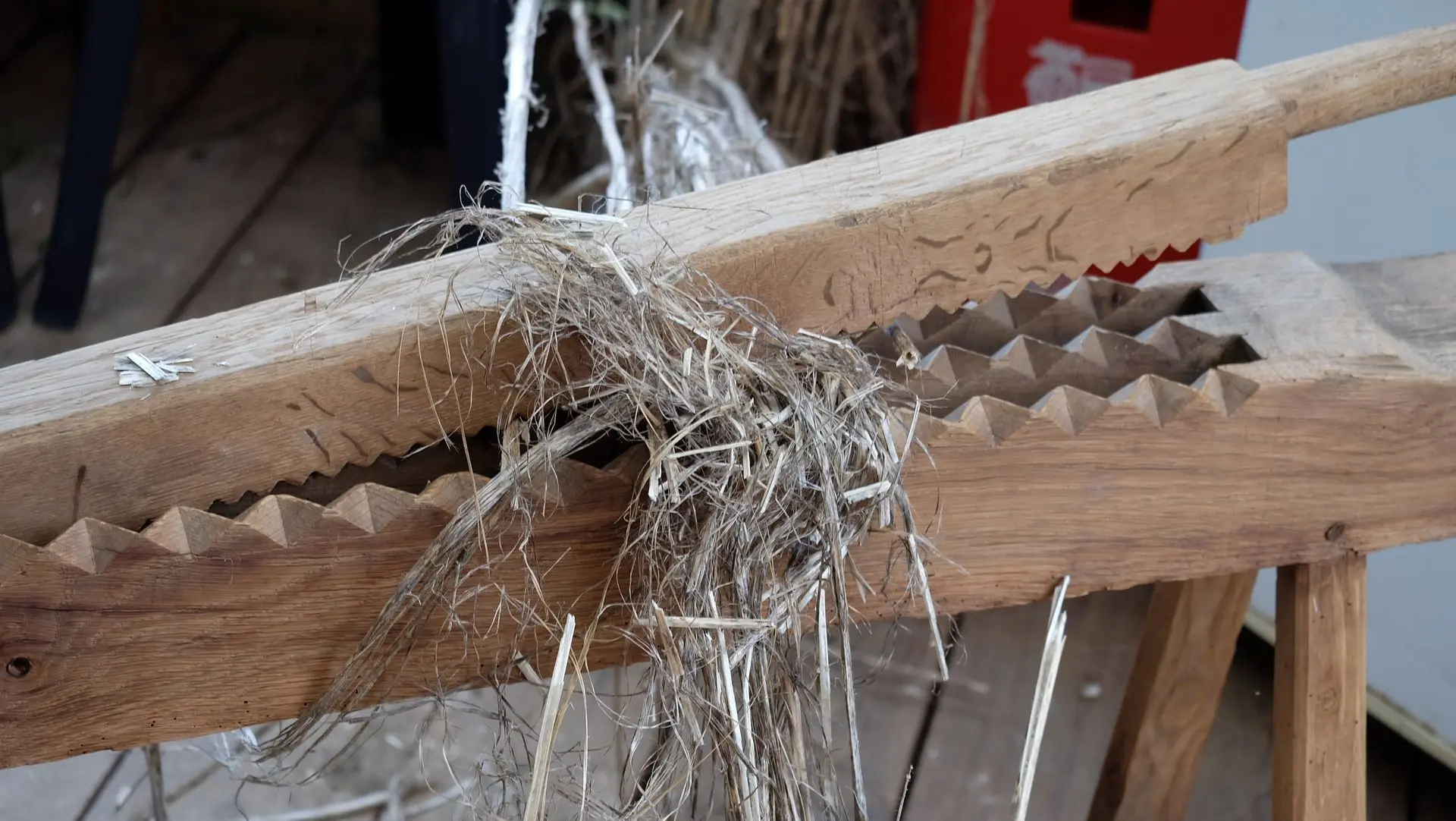
In the past, hemp was manually beaten with a scutching tool to detach the fibres after retting in the field. Today, this step, although done by machines, is done exclusively mechanically. Without chemicals!
Not fun fact... at all!
The pitfalls of cotton
Cotton, particularly grown in Central Asia (Uzbekistan, Kazakhstan), has played a central role in the drying up of the Aral Sea: to irrigate its water-intensive crops, the Soviets diverted the Amu Darya and Syr Darya rivers; the only two sources of supply for the sea. In just a few decades, the sea has shrunk to 10% of its original size, leading to an ecological, health, and economic disaster. Cotton, a symbol of intensive agriculture, has thus become one of the main culprits in the disappearance of one of the largest inland lakes in the world. And that, that saddens us.
The drying up of the Aral Sea has caused a major ecological disaster:
- Disappearance of aquatic biodiversity: more than 20 species of fish have disappeared, ruining local fishing.
- Transformation into a saline desert: the dried-up bed has become covered with salt and toxic dust (pesticide and fertiliser residues), blown by the wind for hundreds of kilometres.
- Air pollution: this dust contaminates the soil, crops, and air, worsening respiratory, skin, and digestive diseases among local populations.
- Soil degradation: the surrounding agricultural lands have degraded, reducing yields.
- Collapse of the local economy: the ports have become graveyards of boats, jobs have disappeared, and entire communities have been abandoned.
- ·Loss of terrestrial and avian biodiversity: migratory birds and coastal species have lost their habitats.
It is one of the most dramatic examples in the world of environmental degradation caused by unsustainable intensive agriculture. Here, cotton.
Viscose, an artificial fibre, which is neither natural, nor “ecological”...
Portugal, Spain, Australia, South Africa and Brazil have experienced major fires linked to eucalyptus plantations intended for viscose production, particularly during heatwaves or strong winds.
→ Example: the 2017 fires in Portugal destroyed thousands of hectares of eucalyptus plantations, causing hundreds of deaths.
Bamboo viscose and rayon, on the other hand, are among the most problematic for workers' health, but not only.
Why relocate hemp in Belgium, it’s a win-win?
✓ Ecology: revitalised soils, captured carbon, protected biodiversity, preserved water.
✓ Local economy: creation of agricultural and industrial jobs, short supply chain.
✓ Health: textiles, food, materials without chemical residues.
✓ Sovereignty: less dependent on imports (cotton, viscose, oil).
Hemp is THE fibre of future generations: naturally resilient, sustainable, and relocatable anywhere in Europe!
👉 What if we put it back at the heart of our agriculture and our fashion?
This is certainly one of our goals and you can participate by investing in our products, contacting us to make a donation, and subscribing to our newsletter to follow our news.
Sources :
Learn more:
Are you looking for more reasons to curse that scoundrel Harry J. Anslinger? Watch the film Billie Holiday, a matter of state
Adopt our best-seller to say goodbye to plastic.
Beyond hemp: choosing your materials consciously
Linen, wool or viscose? Dive into our analyses to distinguish the virtuous fibres from those to avoid for the planet.